
Supporting immunotherapy and targeted cancer therapies with nutrition
Written by Dr Nina Fuller-Shavel
We are delighted to share that our December 2025 review in the journal Frontiers in Nutrition has now been read almost 5,000 times. The paper, "Nutritional strategies in supporting immune checkpoint inhibitor, PI3K inhibitor, and tyrosine kinase inhibitor cancer therapies", brings together the current evidence on how thoughtful, individualised nutrition can support some of the most important modern cancer treatments. I led this work as part of our research programme at Synthesis Clinic, and the response from clinicians and researchers around the world has been genuinely encouraging.
In this blog I summarise the review in plain language, explain what these treatments are, and set out some practical, safe steps that people receiving them can consider, always in partnership with their own medical team.
A note before we begin. Everything here is about working alongside conventional cancer care, never instead of standard oncological care. Nutrition does not cure cancer, and no food or supplement replaces the treatments your oncology team prescribes. What the evidence does suggest is that the right nutritional foundations may help some treatments work as well as they can and may help with tolerating these treatments. That is the spirit in which this is offered.
What our review on nutrition and targeted cancer therapies set out to do
Targeted cancer therapies have transformed outcomes for many people over the past decade. They are designed to act on specific features of a cancer or of the immune system, rather than affecting the whole body in the way older treatments often did.
Our review focused on three families of these treatments and asked a simple question: where does the evidence stand on using nutrition to support them? We looked at how a person's nutritional and metabolic state can influence how well these treatments work and how well they are tolerated, and at how the treatments themselves affect nutritional status of people undergoing these treatment. The throughline is what we call precision integrative oncology: care that is evidence-informed, personalised to the individual, and adjusted over time as someone's situation changes.
The three targeted cancer treatment families that we looked at
Immune checkpoint inhibitors (a type of immunotherapy)
Immune checkpoints are a normal part of the immune system. They act as brakes, stopping the immune response from becoming so strong that it damages healthy tissue. Some cancers exploit these brakes to hide from the immune system.
Immune checkpoint inhibitors (ICIs), which are a part of the immunotherapy family of treatments, release those brakes so that the body's own T cells can recognise and attack cancer cells. Common examples include pembrolizumab (Keytruda), nivolumab (Opdivo), atezolizumab (Tecentriq), durvalumab (Imfinzi), ipilimumab (Yervoy) and avelumab (Bavencio). They are now used across many cancer types, including melanoma and other skin cancers, lung, kidney, bladder, head and neck, liver and stomach cancers, and certain lymphomas.
PI3K inhibitors
PI3K inhibitors block a specific signalling pathway that some cancers use to grow. One of the better-known examples, alpelisib, is used alongside hormone therapy in certain hormone receptor-positive (ER+) breast cancers that carry a particular genetic change. A common challenge with this class of treatment is raised blood sugar, because the same pathway is involved in how the body handles glucose. Careful attention to blood sugar through nutrition, lifestyle and, where needed, medication is an important part of tolerating these treatments well.
EGFR tyrosine kinase inhibitors (EGFR-TKIs)
EGFR-TKIs are tablet treatments used most often in non-small cell lung cancer that carries a specific EGFR mutation. They can be very effective, but they frequently bring digestive side effects such as diarrhoea, and they can affect appetite and nutritional status over time. Here, building up nutritional reserves before and during treatment, and managing digestive symptoms early, makes a real difference to how people feel and cope.
Why nutrition matters during these treatments
The single biggest theme to emerge from the research, particularly for immunotherapy, is the role of the gut microbiome: the vast community of bacteria and other microbes living in the digestive tract. A growing body of evidence links a diverse, well-nourished gut microbiome with better responses to immunotherapy, and we have covered some of this in our previous work. The microbes in our gut help train and tune the immune system, and the foods we eat shape which microbes thrive. This is why diet has moved from the sidelines to a serious area of study in cancer immunotherapy.
For PI3K inhibitors and EGFR-TKIs, the nutritional priorities are slightly different and centre more on managing the metabolic and digestive effects of treatment. Across all three families, though, the principle is the same: the better someone's nutritional foundations, the better placed they are to get through treatment and to give it the best chance of working.
Key supportive strategies from the evidence
Below are the main nutritional approaches the review examined. Some are well supported, others are promising but still under study. None should be started without first checking with your medical or specialist nutrition team, especially during active treatment.
A wholefood, Mediterranean-style dietary pattern is the strongest foundation. This means plenty of vegetables, some fruit, wholegrains, pulses, nuts, seeds, olive oil, and fish where eaten, with limited ultra-processed foods and limited excess saturated fat. This pattern supports a healthy gut microbiome and has been associated with better immunotherapy outcomes in studies to date.
Fibre stands out within that pattern. Higher fibre intake has been consistently associated with better immunotherapy response. UK guidelines recommend around 30g of fibre daily for adults, and emerging trials are exploring whether higher intakes, built up gradually and as tolerated, offer additional benefit. The key word is gradually: increasing fibre too quickly can cause bloating and discomfort. This guidance does not apply if your team has advised you to restrict fibre for a specific clinical reason. Fermented foods, such as live yoghurt, kefir, sauerkraut and kimchi, are being studied for their effects on the gut microbiome alongside immunotherapy, and may be a useful addition for those who tolerate them well.
Live biotherapeutics, sometimes called next-generation probiotics, are an active and exciting area of research, with specific bacterial strains being tested in clinical trials. This is a point that needs care, however. Not every probiotic is helpful, and some standard probiotic products may even work against immunotherapy. The strains under study are specific and are not the same as a random supplement bought off the shelf. For now, the most reliable way to support your gut bacteria is through a varied, fibre-rich, wholefood diet, and to seek professional advice for specifically targeted probiotics that would suit your individual case and your gut microbiome.
Vitamin D sufficiency matters for immune health, and adequate levels have been linked with better immunotherapy outcomes. This is something to test and, if needed, correct under medical guidance, keeping within safe levels.
Certain medications can influence how well immunotherapy works, in particular some acid-suppressing medications (proton pump inhibitors, such as omeprazole) and antibiotics, both of which affect the gut microbiome. This does not mean stopping anything on your own. It means having a conversation with your medical team about whether any of your medications can be reviewed, and minimising avoidable antibiotic use where it is safe to do so.
Fasting and time-restricted eating appear in the research, and some early studies are encouraging. This is an area where I would urge real caution. For people with cancer, unsupervised fasting or significant food restriction carries a genuine risk of unwanted weight loss and malnutrition, which can do more harm than good. Any approach of this kind should only ever be considered under close medical and nutrition supervision, and is not something to try alone.
Medicinal mushrooms and other natural products are at an earlier, mostly preclinical stage of research for these treatments. They are interesting, but the evidence is not yet strong enough to make firm recommendations, and some can interact with treatment, so professional guidance is essential.
Exercise deserves a very special mention too. While not the focus of this particular review, regular physical activity is a well-established way to support both the immune system and the gut microbiome, and it featured strongly in a recent major cancer trial. Building in regular movement, suited to your situation and abilities, is one of the most reliable things most people can do.

Managing the effects of PI3K inhibitors and EGFR-TKIs
For those on PI3K inhibitors, the priority is steady blood sugar control. A lower-glycaemic, wholefood eating pattern, regular movement, and close monitoring with the medical team all help to manage the raised blood sugar that these treatments can cause.
For those on EGFR-TKIs, the focus is on entering and staying in treatment well nourished, and on managing digestive side effects such as diarrhoea early and proactively. Good nutritional support here can make treatment more comfortable and more sustainable.
In both cases, the message is the same one that runs through the whole review: personalised, attentive nutritional care, delivered alongside the oncology team, helps people get the most from their treatment.
What you can do next
If you or someone you care for is receiving one of these treatments, here are some safe starting points. Please check with your medical and nutrition team before making changes, and feel free to share the paper link with them.
Build your meals around a colourful, varied, Mediterranean-style or culturally appropriate anti-inflammatory pattern, rich in vegetables, pulses and wholegrains, and lighter on ultra-processed foods.
Work gradually towards the UK fibre guideline of around 30g a day, unless you have been advised to restrict fibre. Increasing your intake of vegetables, pulses and wholegrains slowly gives your gut time to adjust.
Ask your team about vitamin D testing, and follow their advice on safe supplementation if your levels are low.
Move regularly in a way that suits you, and ask for a referral to a cancer exercise specialist or physiotherapist if you would value tailored support.
Do not start probiotics, supplements or any form of fasting on your own. Seek advice from your oncology and integrative medicine team first, as some can interfere with treatment.
Never stop or change prescribed medication, including over-the-counter products, without checking with your medical team.
If you are under our care at Synthesis Clinic, you may be offered assessment of relevant factors such as systemic inflammation, gut microbiome testing and vitamin D status, alongside personalised support with nutrition, exercise and emotional wellbeing, as appropriate to your situation.
Frequently asked questions
Can nutrition replace my cancer treatment? No. Nutrition is a supportive measure that works alongside conventional cancer treatment. It does not cure or replace immunotherapy, targeted therapy or any treatment your oncology team prescribes. Always follow your medical team's advice.
Does what I eat really affect how well immunotherapy works? The evidence suggests it can play a supporting role, largely through the gut microbiome. A diverse, fibre-rich, wholefood diet has been associated with better immunotherapy responses in studies. Research is ongoing, and nutrition is one part of a wider picture that your integrative team should oversee.
How much fibre should I aim for during immunotherapy? UK guidelines suggest around 30g of fibre a day for adults, although higher dose approaches at 30-50g are being studied. Build up gradually to avoid digestive discomfort, and only follow this guidance if your team has not advised you to restrict fibre for a specific reason.
Should I take a probiotic while on immunotherapy? Not without professional advice. Some probiotics may work against immunotherapy, and the specific strains being studied are not the same as standard shop-bought products. Supporting your gut through a varied, fibre-rich diet is the safer approach for now unless your integrative oncology or cancer nutrition team suggest specific products based on individual assessment.
Is fasting safe during cancer treatment? Fasting is an active research area, but it carries real risks of weight loss and malnutrition for people with cancer. It should only ever be considered under close specialist supervision, and is not something to attempt on your own.
Where to find further information
You can read the full open-access paper here: Nutritional strategies in supporting immune checkpoint inhibitor, PI3K inhibitor, and tyrosine kinase inhibitor cancer therapies (Fuller-Shavel N, et al. (2025) Nutritional strategies in supporting immune checkpoint inhibitor, PI3K inhibitor, and tyrosine kinase inhibitor cancer therapies. Front. Nutr. 12:1670598. doi: 10.3389/fnut.2025.1670598). Please note it is a scientific article and is not written in plain language.
For trusted general information on these treatments, Cancer Research UK and Macmillan Cancer Support are excellent resources. For evidence-based guidance on diet and physical activity, the World Cancer Research Fund is a reliable place to start. They have also produced a good starter guide on eating well with cancer.
To learn more about how our team can help, visit our integrative cancer care and cancer nutrition pages, or get in touch to find the right starting point for you.
This information is provided for educational purposes only and is not a substitute for professional advice and medical care. Please consult your own medical team before making any changes during cancer treatment.
About the author
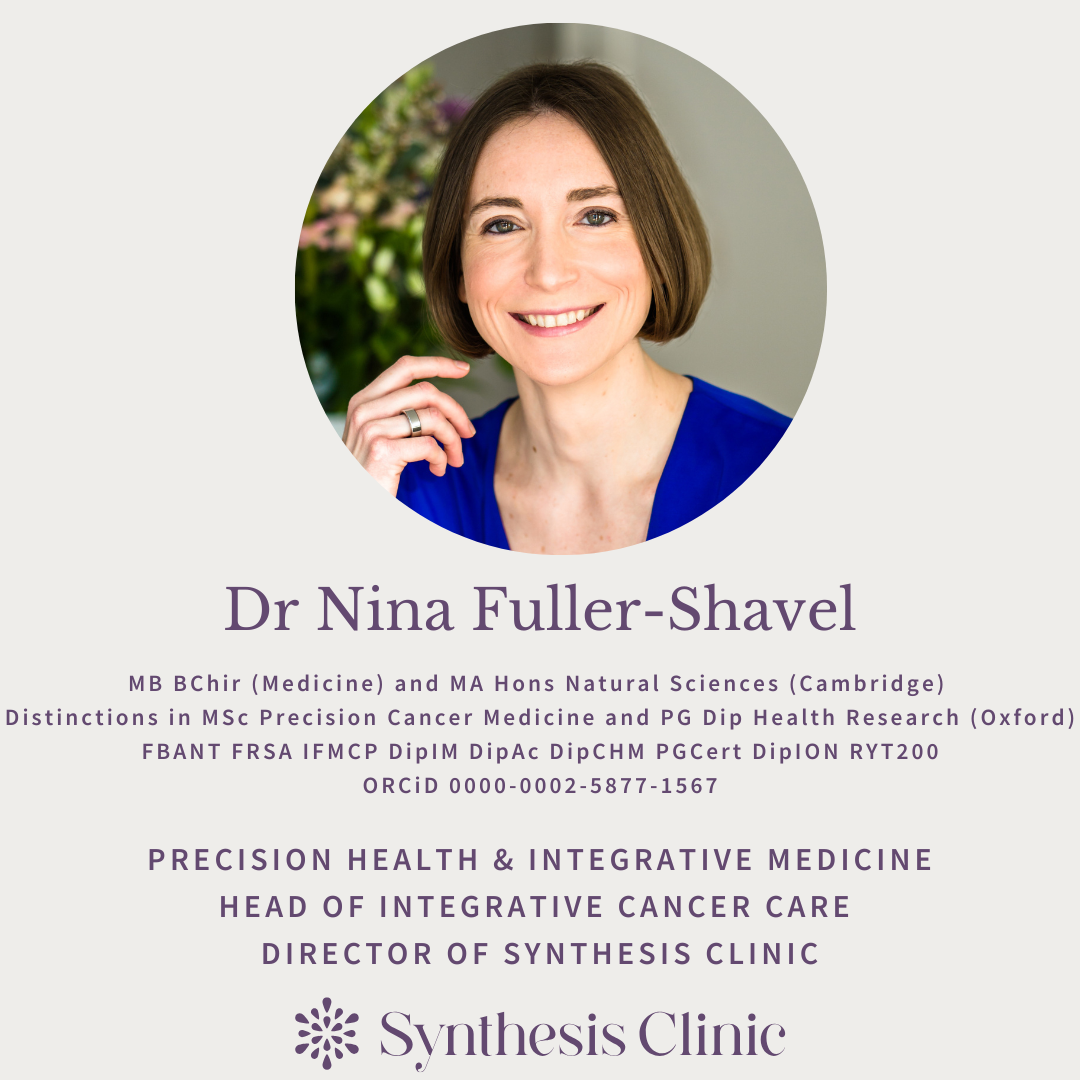
Dr Nina Fuller-Shavel is a Oxbridge-trained physician and scientist specialising in precision health and integrative medicine, and one of the UK's leading voices in integrative oncology. She is Founder, Medical Director and Head of Integrative Cancer Care at Synthesis Clinic, the first CQC-registered, full-scope integrative and lifestyle medicine practice in the UK focusing on cancer care, the Co-Founder of Oncio CIC and CEO of the National Centre for Integrative Oncology (NCIO), a charity widening access to evidence-informed whole-person cancer support. Dr Fuller-Shavel chairs the Society for Integrative Oncology (SIO) Global Committee and sits on the SIO Board of Trustees. She has co-authored multiple scientific publications in the field of integrated cancer care, including international SIO-ASCO guidelines on anxiety and depression, and the Springer textbook ‘Integrative Oncology in Breast Cancer Care’. With over a decade and a half of experience in integrative healthcare, Dr Nina’s research and clinical practice centre on integrative approaches to immunotherapy across multiple cancer types, specialist support for breast and gynaecological cancer, and the role of the gut microbiome in cancer care, with a focus on improving treatment outcomes, easing side effects and supporting quality of life, working alongside conventional oncology care.