
Integrative oncology and breast cancer: what UK women told us was missing, and how we help close the gap
Our new peer-reviewed study in Frontiers in Oncology performed jointly with the NCIO (National Centre for Integrative Oncology) asked 232 women with breast cancer about the support they received. The findings describe a clear split between what standard cancer care does well and where people are left to manage alone.
Published by the Synthesis Clinic Integrative Cancer Care team. Based on Fuller-Shavel N, Watts L, Derakshan N. Systems approach to integrative oncology in breast cancer care: service design, delivery and patient experiences from a UK center. Front Oncol. 2026;16:1870158 (1)
Breast cancer is the most commonly diagnosed cancer worldwide, with around 2.3 million new cases each year, and it accounts for roughly 15% of all new cancer cases in the UK (1,2,3). Five-year survival now exceeds 85% in high-income countries, and that progress has created a large and growing group of women living for years with the physical and emotional consequences of treatment (1).
What the study found
Standard oncological care performed well on medical communication. 89.1% of respondents agreed their oncology team had explained tests and results (1).
Unmet need exceeded 60% across seven supportive care areas, peaking at 85.3% for sleep and 82.9% for sexual health (1).
Among the 21 women who had experienced both standard care and integrative oncology care, reported unmet need fell to 0% in the majority of 13 directly comparable areas (1).
94.1% of those women rated their integrative care as high or very high quality, and 76.5% described it as extremely important within their overall cancer care plan (1).
Where UK breast cancer care is leaving people without support
A total of 211 women told us about their experience of standard oncological care alone. Biomedical tasks were handled reasonably well, and 72.0% agreed they had received adequate information on managing their illness and side effects (1). Supportive care needs were, however, not well met.
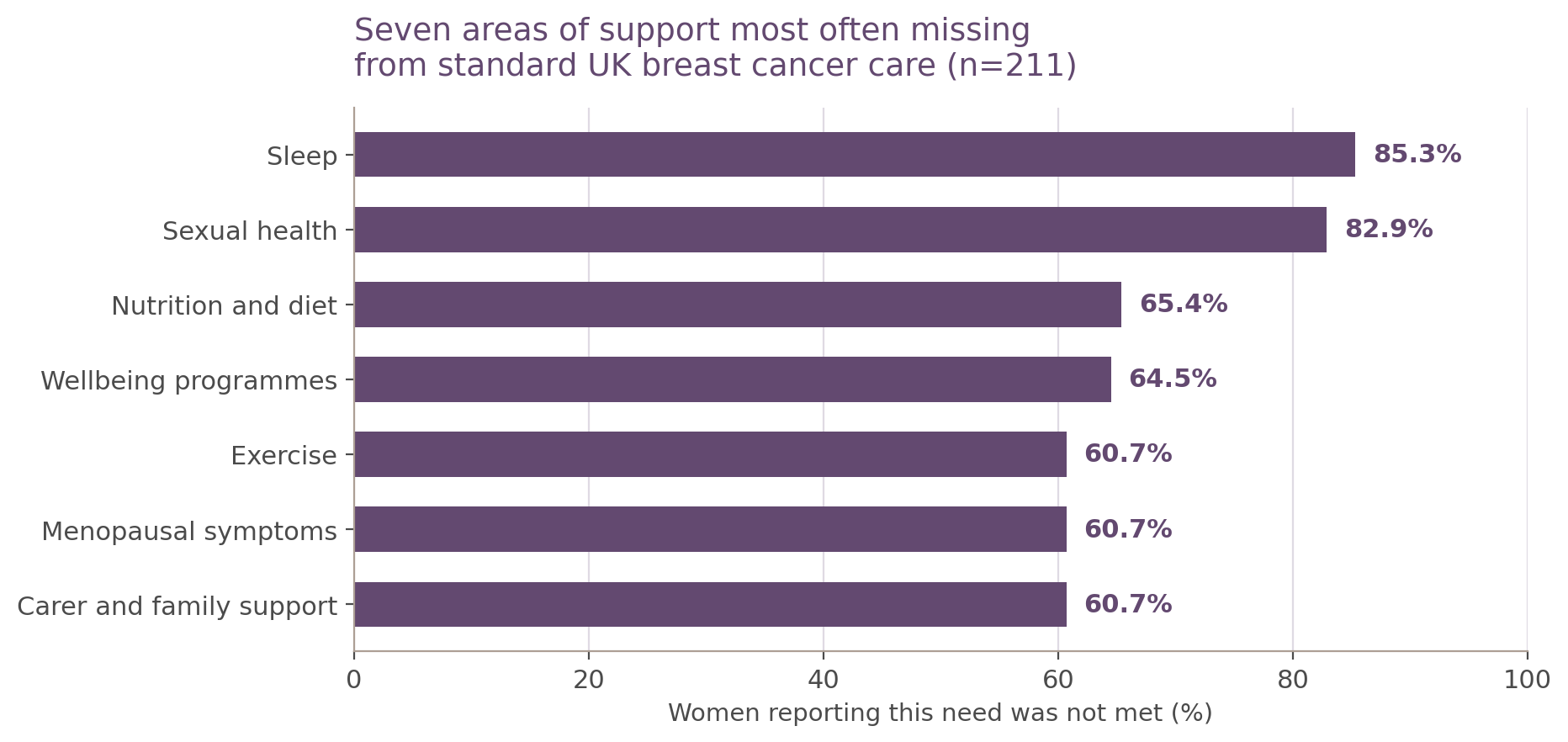
The seven areas where a majority of women reported unmet need. Data from Fuller-Shavel et al., Frontiers in Oncology, 2026, Figure 5 (CC BY).1
Fewer than one in eight women felt sleep had been discussed adequately, and only 10.9% reported receiving information about the impact of cancer and its treatments on sexual health. Nutrition, exercise and wellbeing programmes all sat below 30% met need, despite being core areas covered by ASCO and ESMO guidance (1,10,11).
The relational side of care showed the same picture. 41.2% disagreed that their team had empowered them and given them agency in their treatment journey, and 25.6% disagreed that they were treated as a person and not just their cancer (1). For women with secondary breast cancer several gaps were wider still, with 75.6% reporting unmet need for nutrition advice, 70.7% for exercise and 90.2% for sexual health information (1). This mirrors the UK LIMBER survey, in which only around half of women living with metastatic breast cancer had been offered any additional support (12).
One further finding is worth pausing on. 18% of substantive written comments described mental health difficulties that emerged or worsened after active treatment finished, which is exactly the point at which structured follow-up tends to thin out (1).
Why these gaps matter
These are not soft extras. Meeting physical activity guidelines after diagnosis is associated with approximately a 30-40% reduction in all-cause mortality and around a 30% reduction in breast cancer specific mortality across large meta-analyses, and a 2025 analysis of 50,689 survivors reported a roughly 50% reduction in the hazard ratio for all-cause mortality among those meeting aerobic exercise guidelines (13,14,15).
Structured exercise also improves aromatase inhibitor related joint pain and supports adherence to endocrine therapy (16). Adherence matters because pooled five-year adherence to endocrine therapy sits at around 66%, with side effect burden and low mood among the strongest drivers of stopping early (17). Symptom support, psychological support and lifestyle support belong inside cancer care rather than being viewed as an optional layer or a ‘nice-to-have’.
What integrative oncology is, and what it is not
Integrative oncology is a patient-centred, evidence-informed field that combines lifestyle approaches, mind-body interventions, natural products and complementary therapies alongside standard cancer treatment (4). It is delivered in a way that fully integrates and supports your standard oncological care. At Synthesis Clinic we do not offer alternative medicine, and nothing we provide replaces standard of care modalities (in fact, we often refer for second opinions and trials to get the best oncological treatment options for our patients through specialist centres).
This distinction matters for safety. Somewhere between 37% and 82% of people with breast cancer use some form of complementary therapy, often without telling their medical team, which creates genuine risk of interactions (1). An international clinical practice guideline has therefore recommended that cancer services actively ask about complementary medicine use, record it, and provide structured decision support rather than leaving it as a parallel activity that patients navigate alone (25). This is exactly what we do at Synthesis Clinic.
Integrative oncology supports implementation of key guidelines. The areas where standard UK care most consistently underperforms are the same areas covered by SIO-ASCO guidelines on anxiety and depression, pain and cancer-related fatigue, by the ASCO-endorsed SIO breast cancer guideline, and by ASCO and ESMO guidance on nutrition, physical activity and insomnia (5,6,7,8,9,10,11).
How our integrative cancer care service works
Synthesis Clinic is a CQC-registered, physician-led multidisciplinary outpatient service. Assessment and care planning follow the Systems Approach to Cancer Framework, developed by our Medical Director and award-winning Oxbridge-trained physician, Dr Nina Fuller-Shavel. Thus framework brings together the six lifestyle medicine pillars, the whole-person framework of integrative oncology, the systems hubs described in chronic disease medicine, and the contemporary hallmarks of cancer (1).
In practice this means a detailed history, a review across the lifestyle medicine domains, and an assessment across eight interlinked physiological areas, from microbiome and gut function through to immune function, metabolic and mitochondrial health, hormones and biological rhythms. The output is a personalised plan that sequences and adjusts interventions rather than applying a ‘one size fits all’ list, with the approach being focused on people, not protocols (1). Governance sits underneath all of it: four multidisciplinary team meetings each week, an integrated electronic health record, structured patient-reported outcome measures, and screening of every supplement and herbal prescription for interactions by both clinicians and our integrative clinical pharmacist (1).
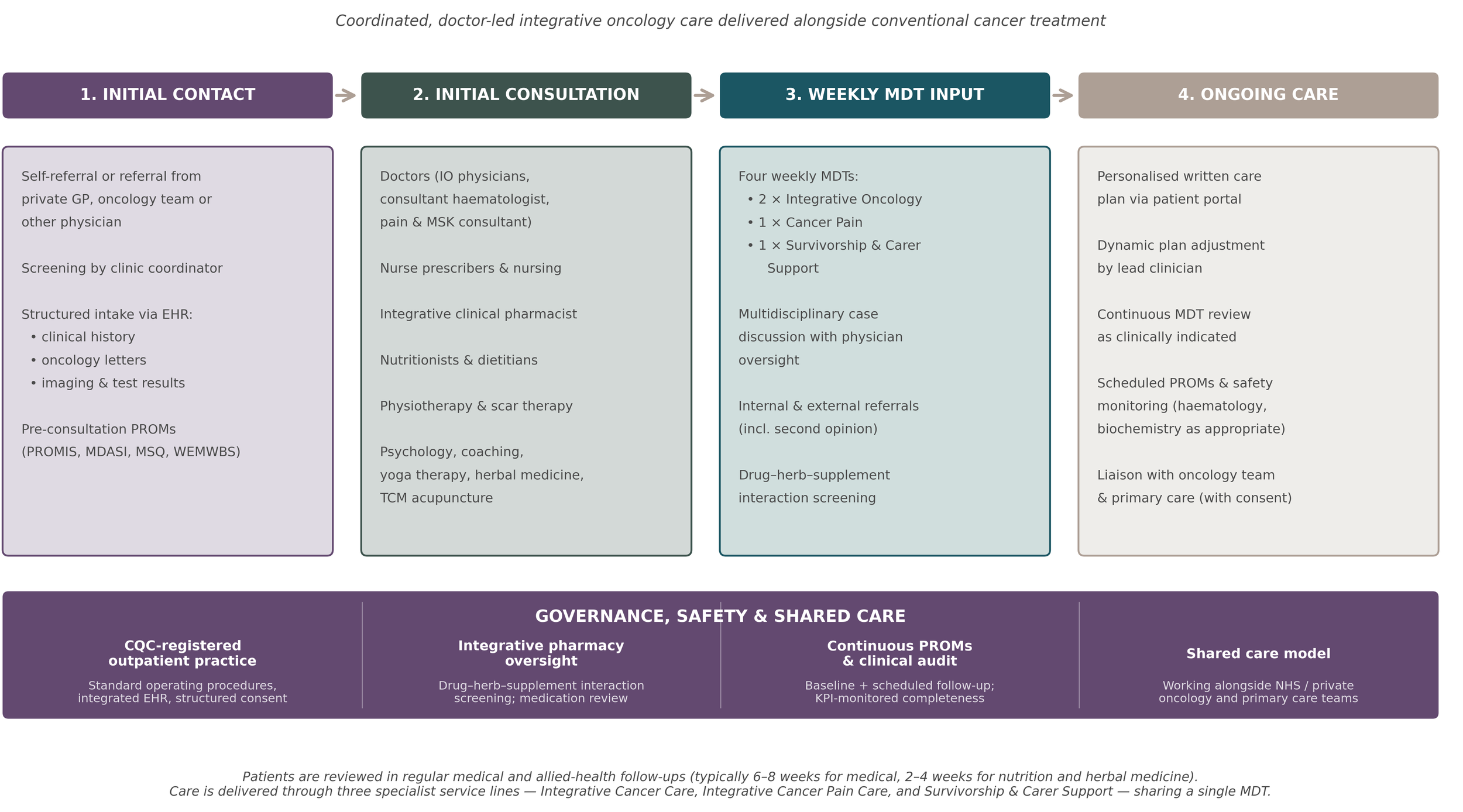
Figure from Fuller-Shavel et al., Frontiers in Oncology, 2026 (CC BY).1
The support our breast cancer patients use
Our four-year record review covered 182 women with breast cancer seen between January 2022 and March 2026, across more than 2,000 consultations. Nearly half (45.6%) had ever-metastatic disease and 20.3% had triple-negative breast cancer, roughly twice the frequency seen in unselected breast cancer populations (1). Most women used several forms of support at once, within one coordinated plan.
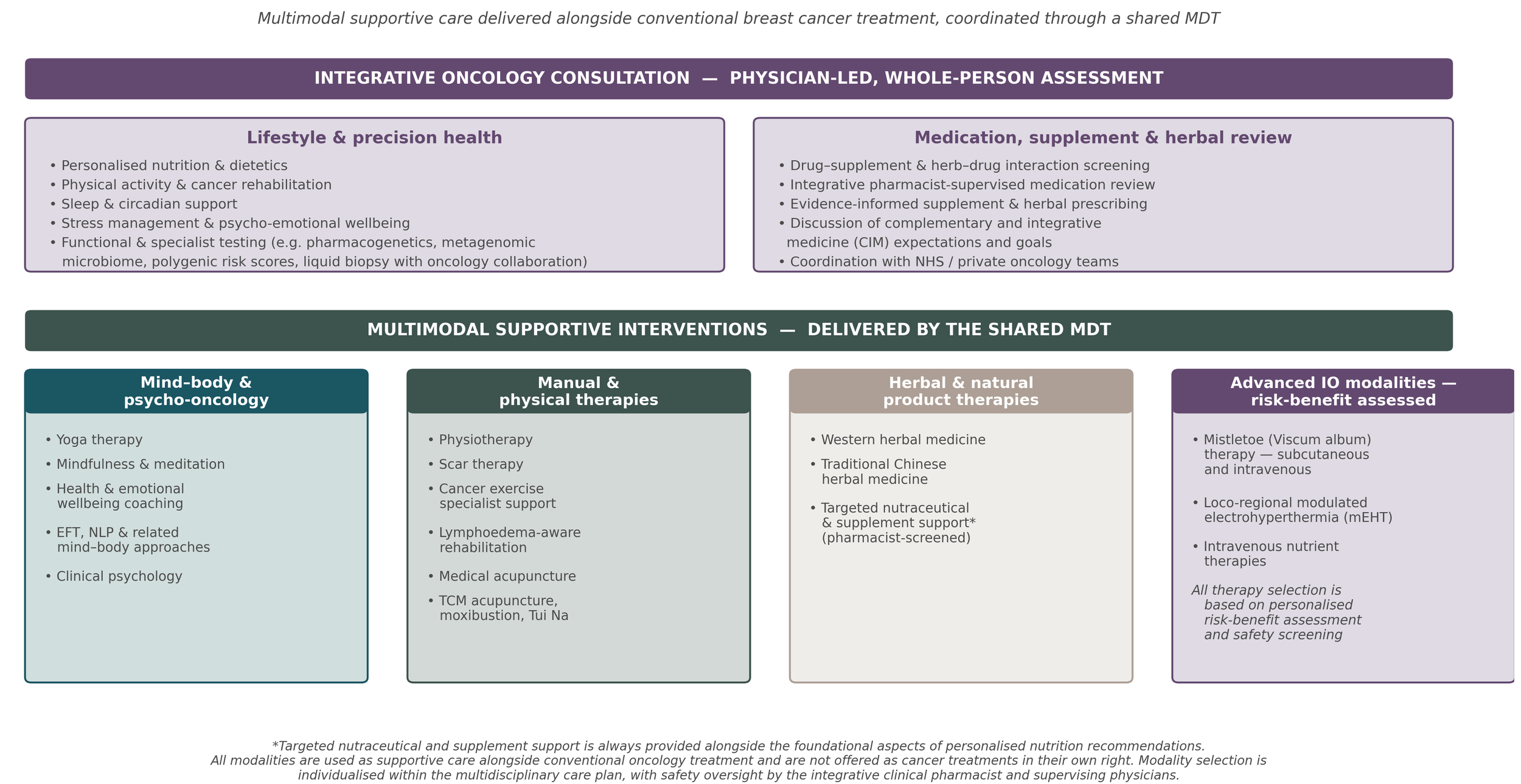
Figure from Fuller-Shavel et al., Frontiers in Oncology, 2026 (CC BY).1
Personalised nutrition (95.0% of patients)
Nutrition is the anchor of our model. Our cancer nutrition team of BANT-registered nutrition practitioners and HCPC-registered dietitians works on nutrition quality, treatment tolerance, weight and body composition, gut symptoms and nutrient status, in line with ASCO guidance on diet and weight management during cancer treatment (10), as well as a personalised assessment using the Systems Approach to Cancer Framework.
Integrative oncology doctor consultations (55.9%)
Our doctors bring the full whole person assessment together, assess medications, review supplements (working as a team with our pharmacy, nutrition and herbal medicine professionals), arrange additional support through various integrative oncology modalities as appropriate to the case, order and interpret precision medicine and other appropriate testing, and coordinate the plan with medical teams.
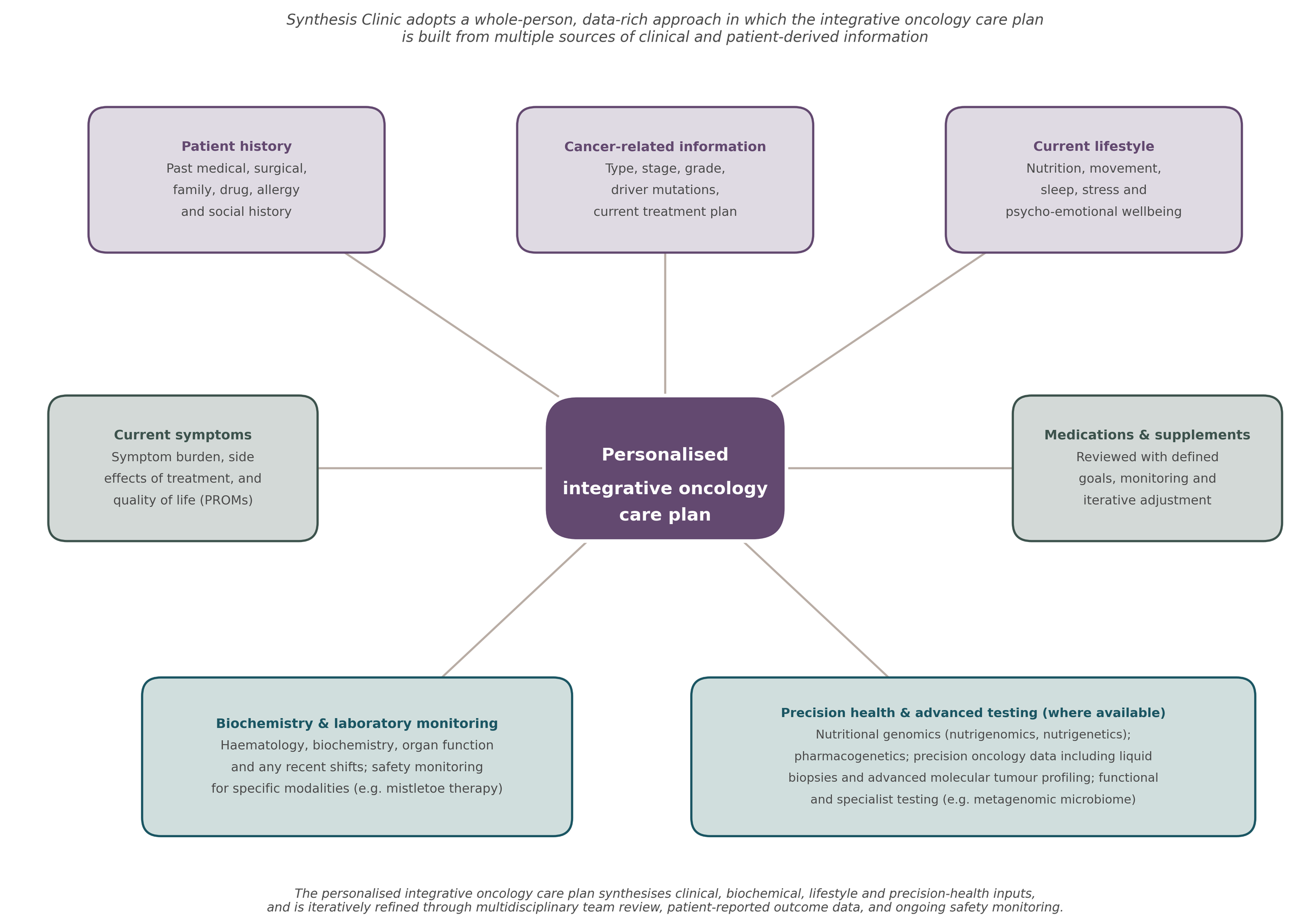
Figure from Fuller-Shavel et al., Frontiers in Oncology, 2026 (CC BY).1
Physiotherapy, rehabilitation and scar therapy (9.9%)
Cancer rehabilitation supports shoulder and chest wall function after surgery, lymphoedema risk management, scar mobility and a safe return to activity, alongside progressive exercise (13,14,15). As mentioned above, meeting physical activity guidelines consistently is not an optional extra - it is essential for managing clinical outcomes, including increased cardiovascular (heart and blood vessel) and metabolic risks that can arise during and after treatment, such as pre-diabetes, diabetes and metabolic syndrome.
Emotional wellbeing support, coaching and psychology (13.2%), yoga therapy (3.3%)
Mind-body and psychological approaches carry Grade A recommendations for anxiety, depression and stress in the ASCO-endorsed SIO breast cancer guideline (5,6). A Cochrane review of 24 trials found moderate-quality evidence that yoga improves health-related quality of life and reduces fatigue and sleep disturbance in women with breast cancer, and a 2026 meta-analysis of 12 randomised trials in 1,620 survivors found a significant improvement in quality of life with mindfulness-based interventions (18,19). At Synthesis Clinic we offer group mindfulness programmes, as well as 1:1 care with our yoga therapist, specialising in cancer support.
Acupuncture and Traditional Chinese Medicine (TCM)
The 2022 SIO-ASCO pain guideline recommends acupuncture for aromatase inhibitor related joint pain (8). In a multicentre randomised trial of 226 postmenopausal women, true acupuncture reduced joint pain compared with sham acupuncture and waitlist control at six weeks, with benefit still evident at 52 weeks (20,21). The SIO-ASCO pain guideline (8) also recommends acupuncture, reflexology or acupressure for general cancer or musculoskeletal pain, while the 2023 SIO-ASCO anxiety and depression guideline recommends acupuncture for anxiety symptoms after treatment has finished, and the 2024 ASCO-SIO fatigue update recommends acupressure and moxibustion for cancer-related fatigue in the post-treatment period. Beyond the guidelines, an overview of 51 systematic reviews found benefit across cancer-related pain, fatigue, insomnia and quality of life, as well as chemotherapy-induced nausea and vomiting, menopausal symptoms, hot flushes and joint pain, with no serious adverse events reported (PMID 36099656). A meta-analysis in cancer-related insomnia reported improved Pittsburgh Sleep Quality Index scores compared with waiting-list control in women with breast cancer during active treatment (PMID 35636168), and a further review found acupuncture eased menopausal symptoms for at least three months after the treatment course ended.
We offer oncology acupuncture and TCM support on-site at our clinic near Reading through consultations with Chau Lai Wong and Damian Allegretti, as well as referring for additional support for our remote patients.
Herbal medicine (6.6%), intravenous therapy (20.9%) and oncothermia (2.2%)
Western and Chinese herbal medicine is prescribed by qualified practitioners within an agreed scope under medical oversight, with every prescription screened for herb-drug interactions. Intravenous nutrient therapy and oncothermia (modulated electrohyperthermia) are on-site services in Berkshire, prescribed by our doctors selectively for specific clinical indications after individual risk-benefit assessment. Specific IV therapy interventions, such as IV vitamin C, are also available via our mobile network service covering most of England and expanding across the UK, which is delivered by trained nurses and paramedics and supervised by Synthesis Clinic. It is important to note that these specialist services are not there to be picked as a single therapy. We deliver whole person integrative oncology care, of which these interventions are only one arm.
Mistletoe therapy: a closer look
Mistletoe therapy was used by 13.7% of our breast cancer patients overall, and by 58.8% of those who answered the survey question on which services they had accessed (1). Because it is the modality patients ask us about most often, it is worth setting out clearly.
Mistletoe therapy uses an injectable extract of European white-berry mistletoe (Viscum album L., abbreviated to VAE). It is given as a small subcutaneous injection, usually two to three times a week, with the dose titrated individually by the prescribing doctor or an independent prescriber based on the skin reaction at the injection site and on clinical review (22,23). Different preparations are made from different host trees, such as apple, fir and pine, and from different seasonal harvests, which changes the balance of active constituents and allows the choice of preparation to be matched to the person and the tumour type (22).
Where mistletoe therapy sits in cancer guidelines
This is a well-established supportive therapy in continental Europe. In Germany, subcutaneous mistletoe is licensed for adults across all solid tumour types and all stages of disease, and statutory health insurance reimburses it in advanced disease when prescribed by a doctor. Helixor and Iscador are also approved in Switzerland and Austria, where costs may be covered on prescription (23). Up to around 60% of people with cancer in Germany may use licensed subcutaneous mistletoe alongside their standard treatment (22). Please note that subcutaneous mistletoe injections are NOT the same as mistletoe tea or mistletoe drops, and the latter do not have the same evidence behind them.
Guideline positions on subcutaneous mistletoe therapy:
SIO clinical practice guideline on integrative therapies in breast cancer, endorsed by ASCO - Grade C (optional) recommendation for quality of life support (5,6,22)
German AGO breast cancer guideline (2023)- Optional recommendation for reducing treatment-related side effects (Oxford level of evidence 1a, Grade B); separate Grade C recommendation relating to overall survival during active treatment (22,24)
German S3 guideline on complementary medicine in oncology (2021) - Subcutaneous mistletoe may be used to improve quality of life in people with solid tumours (level of evidence 1a) (22,26)
German S3 gastric cancer guideline - Optional recommendation for quality of life improvement in gastric and oesophagogastric junction cancers (22)
The strongest and most consistent evidence for mistletoe therapy is in supporting quality of life during standard cancer treatment, including a reduction in treatment side effects. A 2020 systematic review and meta-analysis of 26 publications found a pooled improvement in global quality of life for mistletoe compared with control (standardised mean difference 0.61, 95% CI 0.41 to 0.81), with larger effects in younger patients, with longer treatment, and in studies at lower risk of bias (27). A breast cancer specific meta-analysis of nine randomised trials (n=833) and seven non-randomised studies (n=2,831) found a comparable medium-sized effect on quality of life, with moderate certainty of evidence for the randomised data (28).
For cancer-related fatigue, a 2022 systematic review and meta-analysis of 12 randomised trials (n=1,494) reported a moderate effect (standardised mean difference −0.48), which is comparable in size to physical activity (29). The evidence base here is less settled, the trials have generally used a fatigue subscale of a broader quality of life questionnaire rather than a dedicated fatigue instrument, and fatigue is therefore not yet a specific guideline indication (22).
Patient experience matters alongside the trial data. A qualitative systematic review found that people described meaningful changes in physical, emotional and psychosocial wellbeing during mistletoe therapy, along with reduced chemotherapy side effects, minor self-reported side effects and good adherence. Learning to self-inject gave many people a sense of agency and active involvement in their own care (30).
We are equally clear about what remains unsettled. Whether mistletoe influences survival is an active research question (22,31), and robust tumour-specific randomised trials are needed. We do not offer mistletoe therapy as a treatment for cancer itself.
Safety and how we deliver mistletoe therapy
Subcutaneous mistletoe has a good safety profile when it is initiated and monitored by a trained physician. Most reactions are expected effects of an immunostimulating injection rather than true side effects, such as mild local redness or swelling at the injection site, a slight rise in temperature, or short-lived flu-like symptoms (22). Adverse drug reactions occur in under 10 to 15% of people and are generally mild (22). As with any injectable, allergic reactions are possible, so a first dose is always supervised either at our clinic or remotely through the mobile network.
Mistletoe therapy is not suitable for everyone. It is avoided in pregnancy and breastfeeding, during an active autoimmune flare or on high-dose immunosuppression, during acute fever, and where there is active swelling in brain or spinal tumours (22).
In the UK mistletoe is prescribed off-label and would usually be incorporated within an integrative care plan with careful consideration of the overall clinical picture (22). At Synthesis Clinic every course is assessed and prescribed by one of our doctors, nurse prescribers or pharmacist prescribers, with baseline blood tests including full blood count, inflammatory markers and liver enzymes, a structured consent process, gradual dose titration and ongoing monitoring. Our own published safety experience in adults with solid tumours informs that protocol (32), with more publications to come. Where travelling to clinic is difficult, our nursing team can deliver prescribed treatment at home through our mobile nursing network, under the same medical oversight.
What patients receiving both integrative and standard cancer care told us
Twenty-one Synthesis Clinic patients answered the same questions twice, once about their standard oncological care and once about their integrative oncology care.
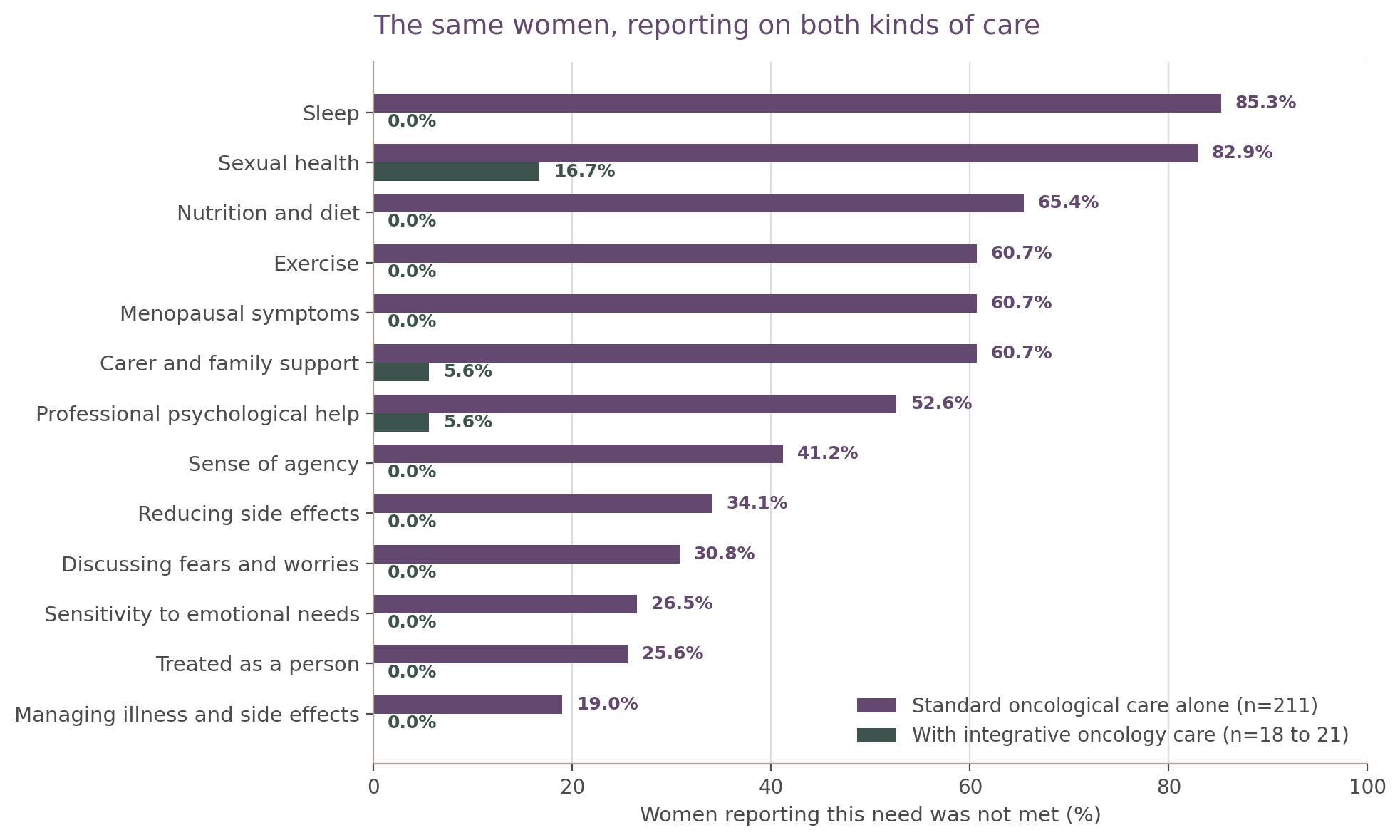
Reported unmet need under standard oncological care compared with standard care plus integrative oncology care, in the same individuals (standard care n=211; integrative oncology care n=18 to 21 by question). Data from Fuller-Shavel et al., Frontiers in Oncology, 2026, Figure 6 (CC BY).1
Reported unmet need fell to 0% in the majority of directly comparable areas, with 100% met need for sleep advice, nutrition and dietary advice, a person-centred approach, and sensitivity to feelings and emotional needs. The experience of being treated as a person and not just a cancer moved from 38.1% unmet to 100% met need within the same individuals. Sexual health remained the least well covered area even within our own service, at 16.7% unmet need, and improving this is part of our current service development.
Women described their integrative care as a "lifeline", as a source of "control during a time which felt out of control", and as the place where they felt "empowered and [I] have hope".1
We would want anyone reading this to weigh those findings properly. This was a small group of 21 women who chose to take part, reporting on their own experience, with no control group. The study was designed to describe how supportive care is experienced rather than to formally test whether integrative oncology changes cancer outcomes, and it should be read that way (1).
Frequently asked questions
Will integrative oncology interfere with my cancer treatment?
Our aim is the opposite. Care is planned to work alongside your oncology treatment, and every supplement and herbal prescription is screened for interactions by both clinicians and our integrative clinical pharmacist. We share information with your oncology team where you consent to this.
Do I need a referral from my oncologist?
Many people self-refer, and we also receive referrals from oncology teams. We always aim to work in shared care with your existing medical team.
Can I access support after my treatment has finished?
Yes. Our Survivorship and Carer Support service is designed for life after treatment, including menopause after cancer, rebuilding physical function and the emotional adjustment that many people find hardest once active treatment ends.
Is support available for family members and carers?
Yes. Carer and family support was one of the areas where standard care showed 60.7% unmet need in our survey, and it is part of what our service is designed to cover.
Can I join a group rather than have one-to-one appointments?
We run online group programmes for people living with cancer and in early survivorship (within the first 3 years post-treatment). Our clinic coordinator team can explain what is currently running.
Talk to our team
If you would like to understand what integrative oncology support might look like alongside your own treatment, our reception and clinic coordinator team can talk you through the services available, what each involves, and what would suit your situation.
Previvor, Survivor and Carer Support | Integrative Cancer Care | Integrative Cancer Pain Care
Important information. This article is for general information and does not replace personalised medical advice. Integrative oncology at Synthesis Clinic is provided alongside conventional oncological care and never as a replacement for it. Seeing our team is not a substitute for standard NHS care, including your GP and urgent or acute services, and we do not provide emergency or out-of-hours care. Mistletoe therapy is prescribed off-label in the UK and is only appropriate for some people; suitability, benefits and risks are assessed individually before any prescription. Please discuss any supplements, herbal medicines or complementary therapies with your oncology team and with a qualified integrative oncology clinician before starting them. If you are a Synthesis Clinic patient, please raise any questions about the content of this article with your own Synthesis Clinic healthcare professional.
References
Fuller-Shavel N, Watts L, Derakshan N. Systems approach to integrative oncology in breast cancer care: service design, delivery and patient experiences from a UK center. Front Oncol. 2026;16:1870158. doi:10.3389/fonc.2026.1870158
World Health Organization. Breast cancer fact sheet. Geneva: World Health Organization; 2025.
Cancer Research UK. Breast cancer statistics. London: Cancer Research UK; 2025. Available from: cancerresearchuk.org
Witt CM, Balneaves LG, Cardoso MJ, Cohen L, Greenlee H, Johnstone P, et al. A comprehensive definition for integrative oncology. J Natl Cancer Inst Monogr. 2017;2017(52):lgx012. doi:10.1093/jncimonographs/lgx012
Lyman GH, Greenlee H, Bohlke K, Bao T, DeMichele AM, Deng GE, et al. Integrative therapies during and after breast cancer treatment: ASCO endorsement of the SIO clinical practice guideline. J Clin Oncol. 2018;36(25):2647-55. doi:10.1200/JCO.2018.79.2721
Greenlee H, DuPont-Reyes MJ, Balneaves LG, Carlson LE, Cohen MR, Deng G, et al. Clinical practice guidelines on the evidence-based use of integrative therapies during and after breast cancer treatment. CA Cancer J Clin. 2017;67(3):194-232. doi:10.3322/caac.21397
Carlson LE, Ismaila N, Addington EL, Asher GN, Atreya C, Balneaves LG, et al. Integrative oncology care of symptoms of anxiety and depression in adults with cancer: Society for Integrative Oncology-ASCO guideline. J Clin Oncol. 2023;41(28):4562-91. doi:10.1200/JCO.23.00857
Mao JJ, Ismaila N, Bao T, Barton D, Ben-Arye E, Garland EL, et al. Integrative medicine for pain management in oncology: Society for Integrative Oncology-ASCO guideline. J Clin Oncol. 2022;40(34):3998-4024. doi:10.1200/JCO.22.01357
Bower JE, Lacchetti C, Alici Y, Barton DL, Bruner D, Canin BE, et al. Management of fatigue in adult survivors of cancer: ASCO-Society for Integrative Oncology guideline update. J Clin Oncol. 2024;42(20):2456-87. doi:10.1200/JCO.24.00541
Ligibel JA, Bohlke K, May AM, Clinton SK, Demark-Wahnefried W, Gilchrist SC, et al. Exercise, diet, and weight management during cancer treatment: ASCO guideline. J Clin Oncol. 2022;40(22):2491-507. doi:10.1200/JCO.22.00687
Grassi L, Zachariae R, Caruso R, Palagini L, Campos-Ródenas R, Riba MB, et al. Insomnia in adult patients with cancer: ESMO clinical practice guideline. ESMO Open. 2023;8(6):102047. doi:10.1016/j.esmoop.2023.102047
Fallowfield L, Starkings R, Palmieri C, Tait A, Stephen L, May S, et al. Living with metastatic breast cancer (LIMBER): experiences, quality of life, gaps in information, care and support of patients in the UK. Support Care Cancer. 2023;31(8):459. doi:10.1007/s00520-023-07928-8
Friedenreich CM, Stone CR, Cheung WY, Hayes SC. Physical activity and mortality in cancer survivors: a systematic review and meta-analysis. JNCI Cancer Spectr. 2020;4(1):pkz080. doi:10.1093/jncics/pkz080
Spei ME, Samoli E, Bravi F, La Vecchia C, Bamia C, Benetou V. Physical activity in breast cancer survivors: a systematic review and meta-analysis on overall and breast cancer survival. Breast. 2019;44:144-52. doi:10.1016/j.breast.2019.02.001
Wilson OWA, Matthews CE, Wojcik KM, Tarasenko YN, Butera G, Gorzelitz J, et al. The effects of post-diagnosis recreational aerobic exercise among breast cancer survivors: a systematic review and meta-analysis. Cancer Epidemiol Biomarkers Prev. 2025;34(9):1252-63. doi:10.1158/1055-9965.EPI-24-1798
Baglia ML, Lin IH, Cartmel B, Sanft T, Ligibel J, Hershman DL, et al. Endocrine-related quality of life in a randomized trial of exercise on aromatase inhibitor-induced arthralgias in breast cancer survivors. Cancer. 2019;125(13):2262-71. doi:10.1002/cncr.32051
Yussof I, Mohd Tahir NA, Hatah E, Mohamed Shah N. Factors influencing five-year adherence to adjuvant endocrine therapy in breast cancer patients: a systematic review. Breast. 2022;62:22-35. doi:10.1016/j.breast.2022.01.012
Cramer H, Lauche R, Klose P, Lange S, Langhorst J, Dobos GJ. Yoga for improving health-related quality of life, mental health and cancer-related symptoms in women diagnosed with breast cancer. Cochrane Database Syst Rev. 2017;1(1):CD010802. doi:10.1002/14651858.CD010802.pub2
do Amaral PGT, Tosello G, Silva Filho PP, Nahas EAP, Buttros DAB. Effectiveness of mindfulness-based interventions on quality of life in women breast cancer survivors: a systematic review and meta-analysis. Breast. 2026:104701. doi:10.1016/j.breast.2026.104701
Hershman DL, Unger JM, Greenlee H, Capodice JL, Lew DL, Darke AK, et al. Effect of acupuncture vs sham acupuncture or waitlist control on joint pain related to aromatase inhibitors among women with early-stage breast cancer: a randomized clinical trial. JAMA. 2018;320(2):167-76. doi:10.1001/jama.2018.8907
Hershman DL, Unger JM, Greenlee H, Capodice J, Lew DL, Darke A, et al. Comparison of acupuncture vs sham acupuncture or waiting list control in the treatment of aromatase inhibitor-related joint pain: a randomized clinical trial. JAMA Netw Open. 2022;5(11):e2241720. doi:10.1001/jamanetworkopen.2022.41720
Fuller-Shavel N. Mistletoe therapy in integrative oncology. In: Zick SM, Bao T, editors. Comprehensive Integrative Oncology. 1st ed. London: Academic Press (Elsevier); 2026. Chapter 51, p. 723-41. doi:10.1016/B978-0-443-30194-0.00025-4
Mistletoe-therapy.org. Information for doctors: approval, indication, prescription, reimbursement. Available from: mistletoe-therapy.org (accessed August 2026)
Arbeitsgemeinschaft Gynäkologische Onkologie (AGO). Guidelines on diagnostics and therapy of early and advanced breast cancer. Germany: AGO; 2023.
Balneaves LG, Watling CZ, Hayward EN, Ross B, Taylor-Brown J, Porcino A, et al. Addressing complementary and alternative medicine use among individuals with cancer: an integrative review and clinical practice guideline. J Natl Cancer Inst. 2022;114(1):25-37. doi:10.1093/jnci/djab048
Deutsche Krebsgesellschaft, Deutsche Krebshilfe, AWMF. S3 guideline for complementary medicine in the treatment of oncological patients. Germany; 2021.
Loef M, Walach H. Quality of life in cancer patients treated with mistletoe: a systematic review and meta-analysis. BMC Complement Med Ther. 2020;20(1):227. doi:10.1186/s12906-020-03013-3
Loef M, Paepke D, Walach H. Quality of life in breast cancer patients treated with mistletoe extracts: a systematic review and meta-analysis. Integr Cancer Ther. 2023;22:15347354231198074. doi:10.1177/15347354231198074
Pelzer F, Loef M, Martin DD, Baumgartner S. Cancer-related fatigue in patients treated with mistletoe extracts: a systematic review and meta-analysis. Support Care Cancer. 2022;30(8):6405-18. doi:10.1007/s00520-022-06921-x
Evans M, Bryant S, Huntley AL, Feder G. Cancer patients' experiences of using mistletoe (Viscum album): a qualitative systematic review and synthesis. J Altern Complement Med. 2016;22(2):134-44. doi:10.1089/acm.2015.0194
Wode K, Kienle GS, Björ O, Fransson P, Sharp L, Elander NO, et al. Mistletoe extract in patients with advanced pancreatic cancer: a double-blind, randomized, placebo-controlled trial (MISTRAL). Dtsch Arztebl Int. 2024;121(11):347-54. doi:10.3238/arztebl.m2024.0080
Fuller-Shavel N, Davies EJ. Safety of intravenous and subcutaneous mistletoe administration in adults with solid tumours: single UK integrative oncology centre experience. Int J Integr Oncol. 2023;1:26-32. doi:10.69068/IJIO05
Charts prepared by Synthesis Clinic using data Fuller-Shavel N, Watts L, Derakshan N. Front Oncol. 2026;16:1870158, are published under a Creative Commons Attribution (CC BY) licence.